
My name is Sal Cincotta. I’m a wedding and portrait photographer. In every one of our wedding packages, we include a wedding album. In fact, it’s one of the things we’ve become known for. We will not, as a full service studio, deliver digital only. It’s just not what we’re going to do. And there’s a simple reason for it. A wedding album truly is the first family heirloom for your clients. Now, you have to believe that in your heart because if you do, it’s easy to position that to your clients. Sure, we have the same clients you do where they come in and they say, “We just want our digital files,” or “We don’t need an album.” Even if they don’t want their digital files, they just are convinced they don’t need an album. A lot of that, I blame you, the photographer. Now I know that’s not what you want to hear, but the truth is that’s a little bit closer to reality because you may not believe in the product you’re offering.
Selling wedding albums is about education
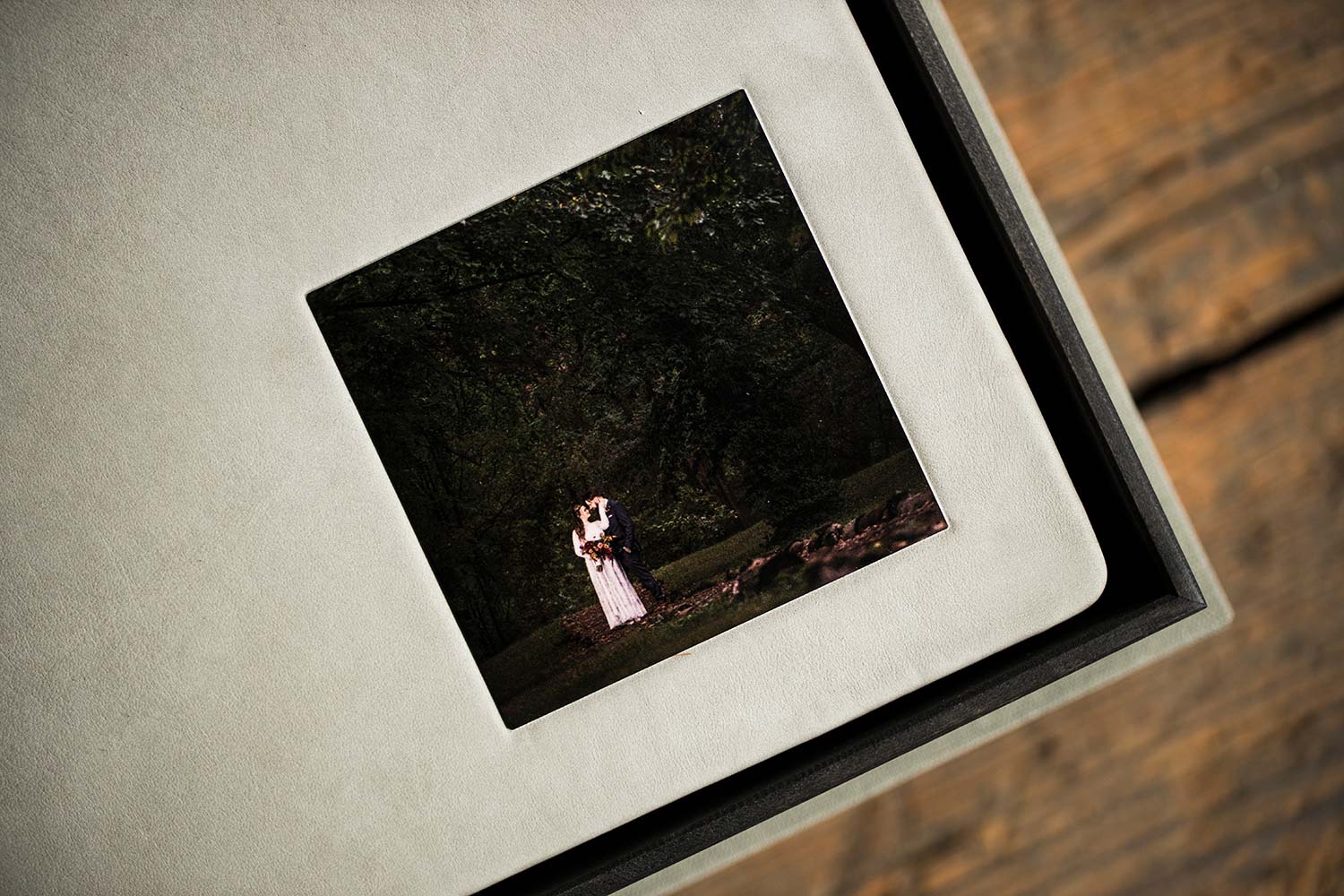
When I have other photographers here that I’m training or mentoring, we walk them through the process of positioning wedding albums to our clients. And it’s not some sleazy sales process; it’s just really about education and knowledge. One of the things I think you have to realize is that clients do, in fact, want a wedding album. I recently got married myself, and we wanted a wedding album. We want our pictures, our favorite pictures, out there. Sure, you can get a digital frame. Sure, I can put some of those images on Facebook, but I want the best of the best out and on display.
Do you differentiate your wedding albums from those of your competitors?
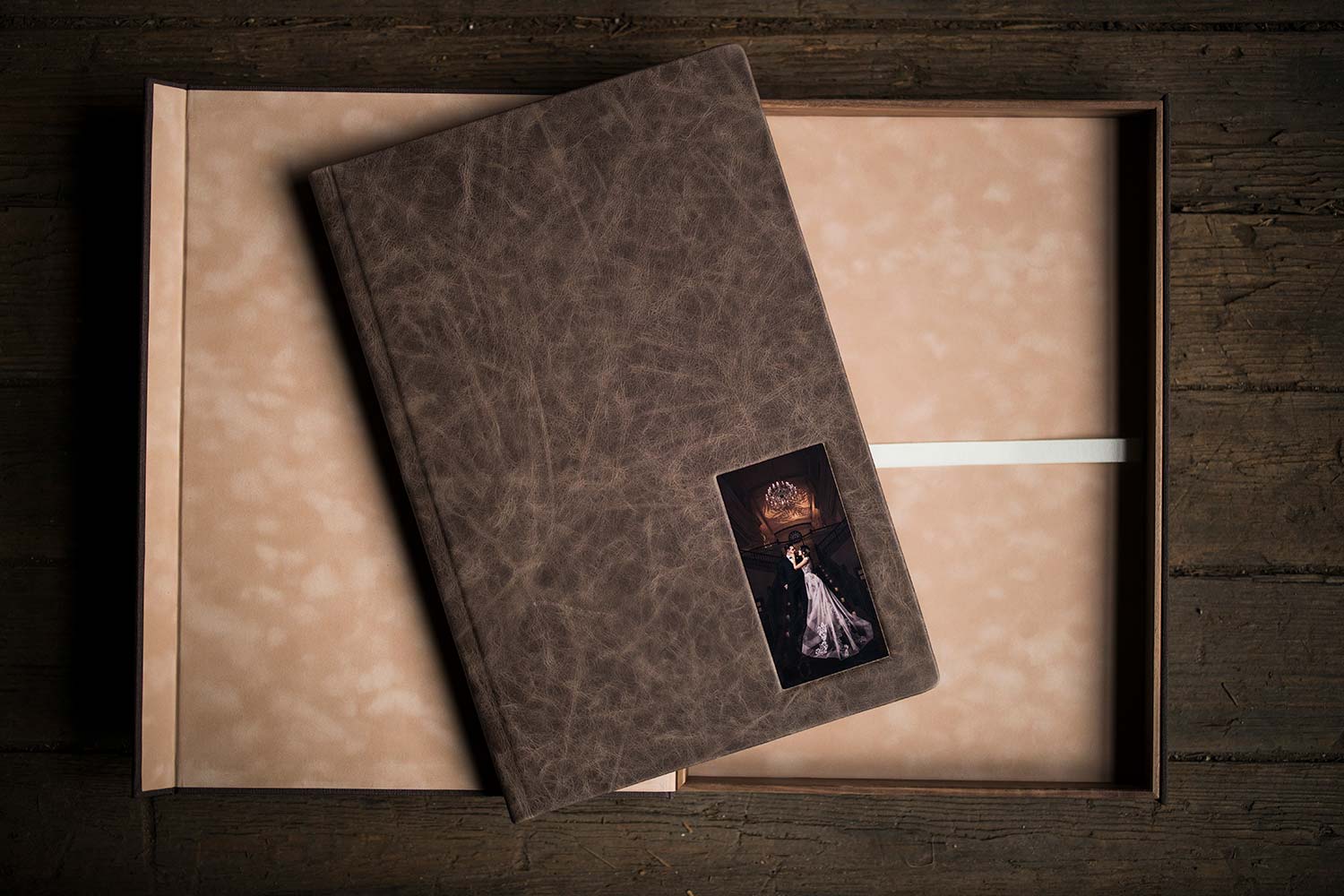
Part of the problem is that you may not be doing a good enough job in differentiating your product from one that your client feels, perception is reality, that they can get at Sam’s Club or online at any of the number of “album companies” that are out there. We all know that those are garbage albums. They’re not archival. They have thin pages. They’re not going to last long. But are you educating your client on that? Because when they’re meeting with you during the initial consultation, they have no idea. Everything gets classified as an album. But then, when you start showing them unique products, maybe a black Italian leather, an acrylic cover, and you start showing them the lay-flat design, or thick pages, all of a sudden they’ll start to realize that not all wedding albums are created equally.
Offer your clients an album they can’t get anywhere else
So let’s start there. You have to offer your client a unique product. That’s where you have to start. I’ve watched so many photographers over the years go to trade shows like ShutterFest or Imaging, and they search out albums and they’re looking for the cheapest albums, so that they can maximize their profit. But that is extremely shortsighted. What you should be doing is looking for a high quality product that allows you to charge more, which ultimately allows you to make more money. Do you want to be the Walmart of photography or do you want to be the Louis Vuitton of photography? I’d rather play up in the Louis Vuitton space and establish my brand as a luxury brand versus being the low cost provider. Now, granted, there are high volume studios and there are situations where you have to offer a low-priced product, but for the most part, if you’re doing 20 weddings a year or less, start pushing a little bit up and offer your clients a better product.
Show samples to sell more albums
The other thing you want to do is when you’re offering a superior product is show samples. That’s another thing I’ve noticed with photographers; they’re not willing to invest in sample albums. Today’s labs are making it super simple for you to get a discount on your first order or on a sample album. So make that investment.
I work with H&H Color Lab and full transparency, I got them to create a luxury album line just for me. And the reason was because I knew my clients wanted something better, better in size, better in material, better in archival quality. I don’t want to give them an album that in 10 years is starting to yellow and fall apart.
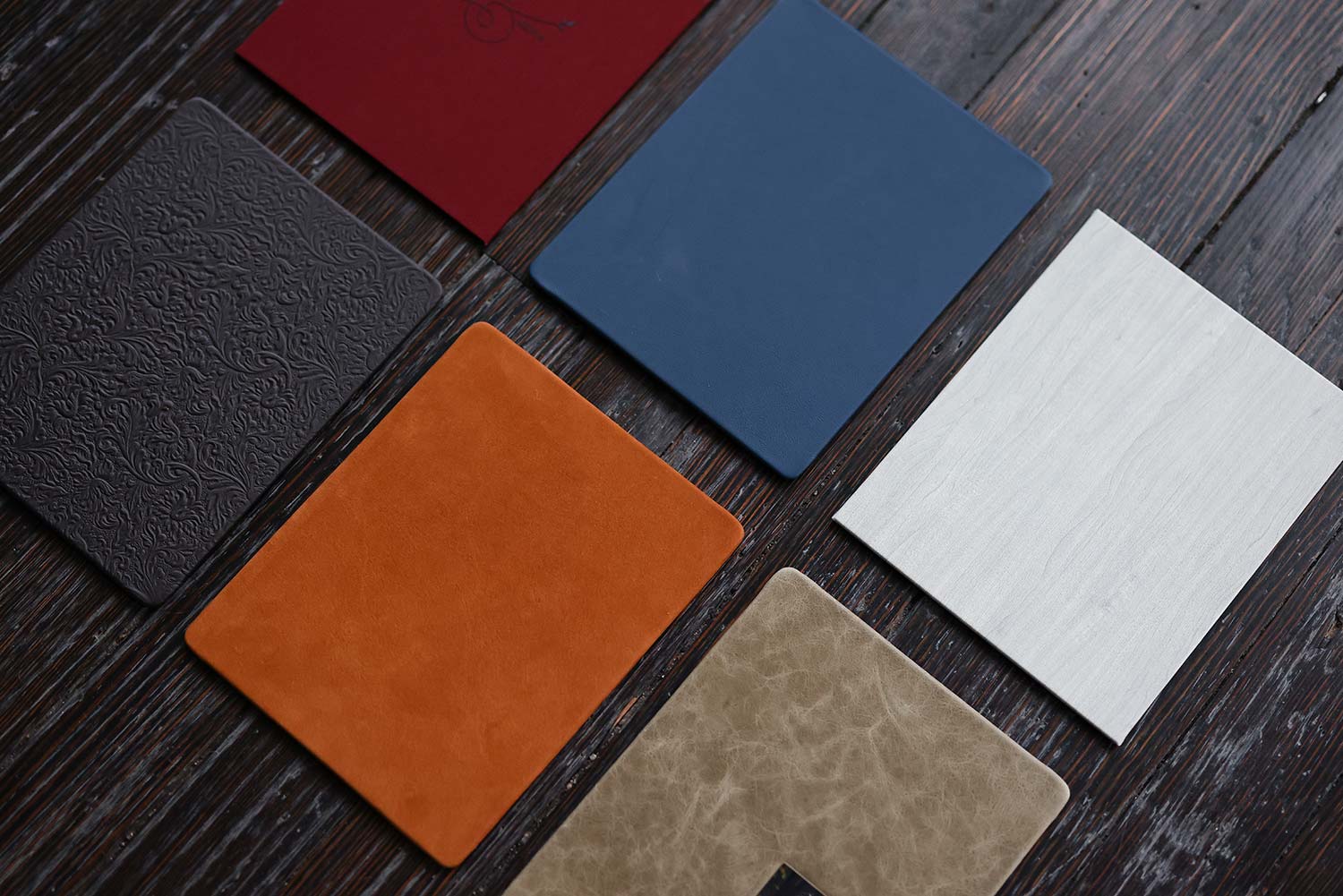
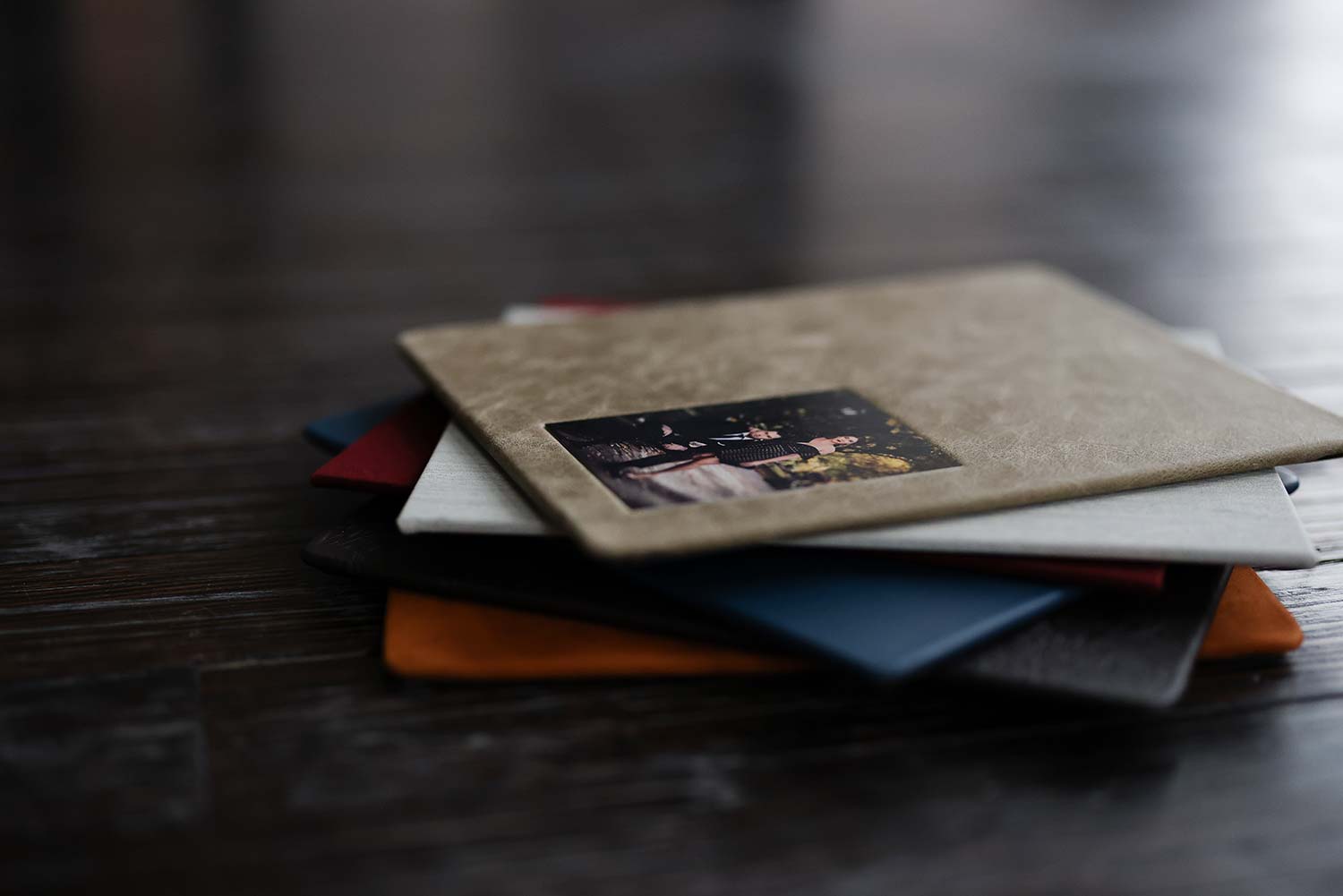
One of the things I did with H&H Color Lab was create cover samples. There are so many leather options, but what are you going to do? Order 40 sample albums? That doesn’t make any sense, for you, the business, storage space, I mean, it’s absurd. So now we’ve created these album panels which showcase the leather and the liner, so now you can have a stack of these that are sitting out, and you can give clients a sample of what some of those leathers are going to look like in a little bit more detail than maybe a swatch might look. You can show them what debossing is going to look like, or a metal inlay.
So now when a client is coming to us, they’re seeing all this incredible product and they’re getting the sense of, “Wow, this is so much better than the other photographers that we’ve looked at.” So this is going to help you stand out.
How we educate our clients about our wedding albums
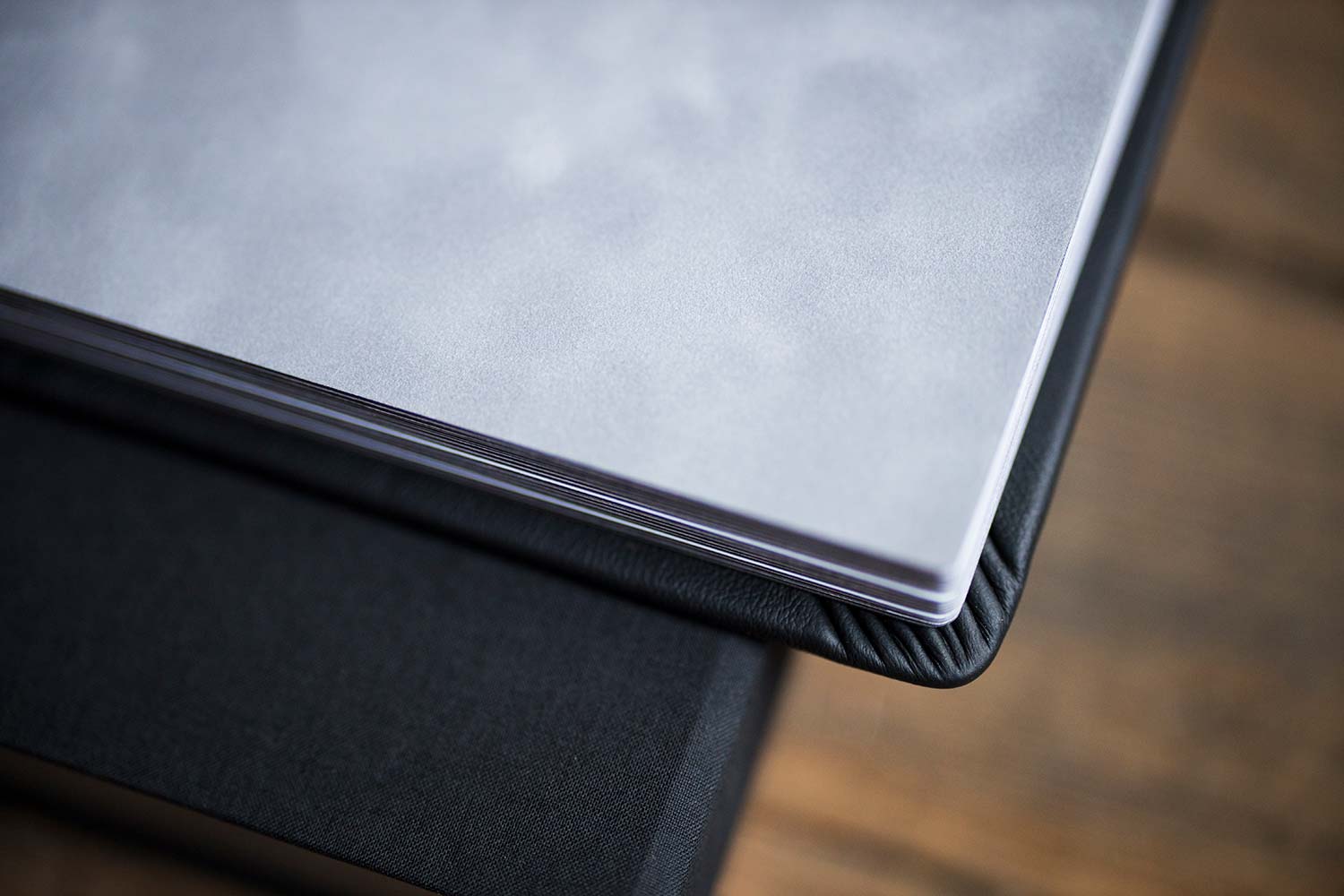
In our top level wedding package, (we call it Black Label) we offer an album that blows all of our clients away. It’s 12×18, with crushed velvet liner. One of the things we do is walk our clients through all of the details, because I believe an educated client is the best client. One of the things we focus on with our clients is we show them the corners. They have what are known as pleated corners, and with pleated corners, a machine cannot do this. It has to be done by hand. So when you buy an album and you see the corner just kind of folded, you know what’s under that fold? A staple, and you know what a staple is not? That metal is not archival. It is going to rust and turn your page’s color and rot over time. What’s happening here with an artisan album – a handmade album – is these corners are pleated by hand. That’s why they look the way they look. A machine cannot emulate that.
We’re educating our clients on the wedding album and what makes it so unique. We then tell our clients that this is going to be their first family heirloom. When your house is burning down, this is what you’re running in to get. This is the one thing that matters. You’re passing this on from generation to generation. These aren’t sales tactics. These are just knowledgeable tidbits that you’re handing over to your client as you’re explaining to them the quality of the product.
We then do things like grab the spine of the album and we show our client, just so you know, this album’s going to last you. And when we grab the spine and we show them that it’s not really moving that much. Now, there does have to be some wiggle room in it so that the pages can open, but if you get a cheap album, you’ll notice that those pages will start sliding. Well, when they’re sliding, what’s going to happen is over time, as it gets opened and closed, the glue’s going to separate. The pages will separate. We’ve all seen books like that. That’s what’s happening there. It is a poorly made book. It is not made by what I’d consider a craftsman or a master craftsman. It’s being made in more of an assembly line process. This is knowledge that you should be sharing with your clients. That’s ultimately how you’re going to be able to stand out from your competitors and get your clients to want a book like this.
Get a swatch kit
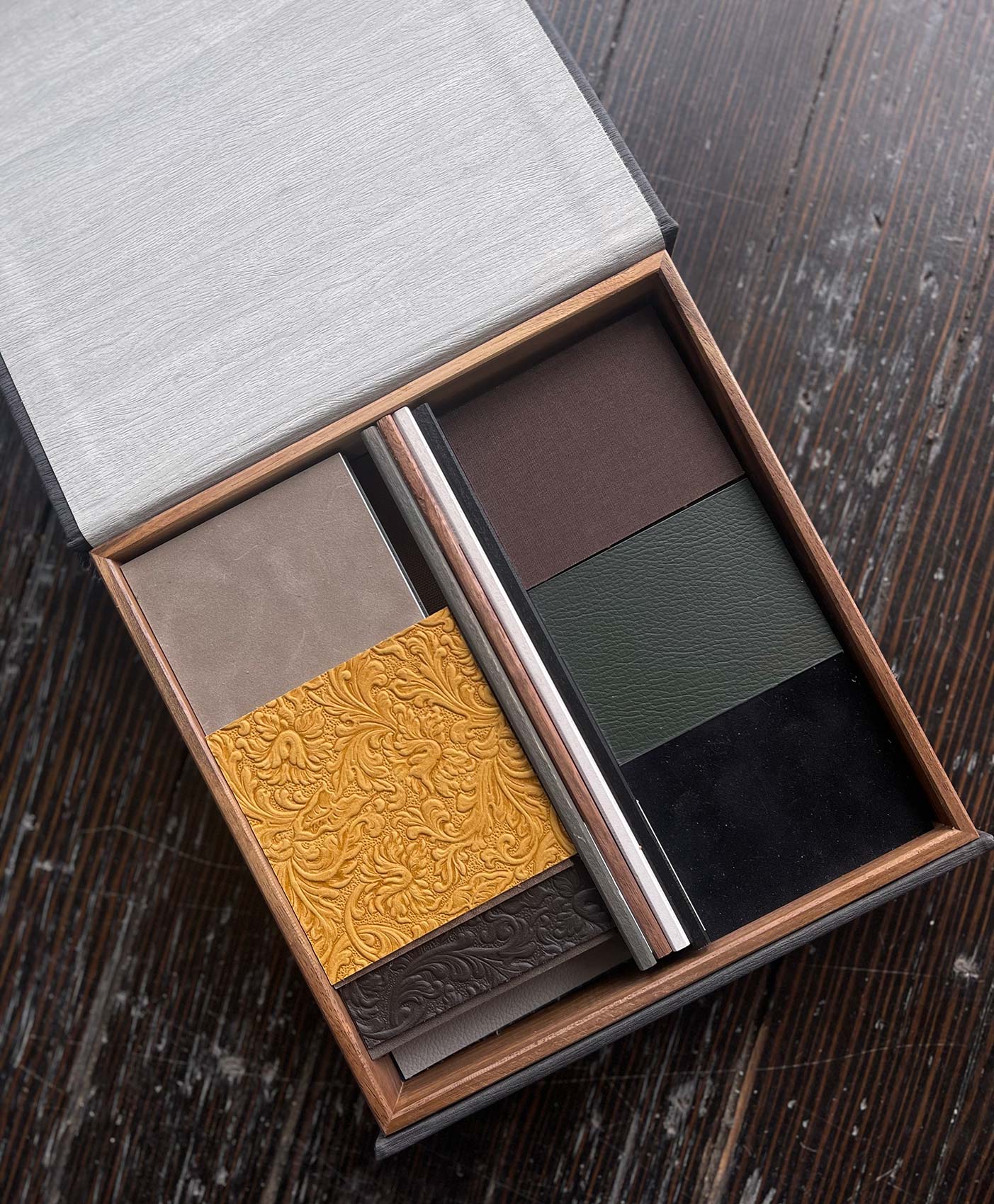
The other thing you want to do is get your hands on, a swatch kit. Another thing we do is show our clients our swatch kit that has all the different leathers they can get on their wedding album. Now when a client comes to you, you’re not just saying, “Oh, we can get it in black leather and brown leather.” Now they’re feeling the leather, they’re seeing the leather, they’re smelling the leather. I mean, everybody likes a good sniff of leather.
These are the kind of things that will help you really elevate your client experience and sales.
Recap & Bonus Tip
Educate your client. Show a variety of products. Invest in those samples.
One of the final tidbits I want to give you is: use your albums to drive your clients through the package levels. In our wedding studio, we have three packages. Just think of it as a small, medium, large, or entry level, mid-level, high level. I don’t put the same album in the entry-level package as I do in the top package. So our base album is just a press printed, pretty inexpensive 10×10 book. It’s got a gutter, it’s got thin pages.
In our middle package, clients can get a 10×10 album with an acrylic cover, but only black leather. The pages are significantly thinner, no crushed velvet, no thick pages and no lay flat design. So it’s still a beautiful book, it’s not the Mac daddy.
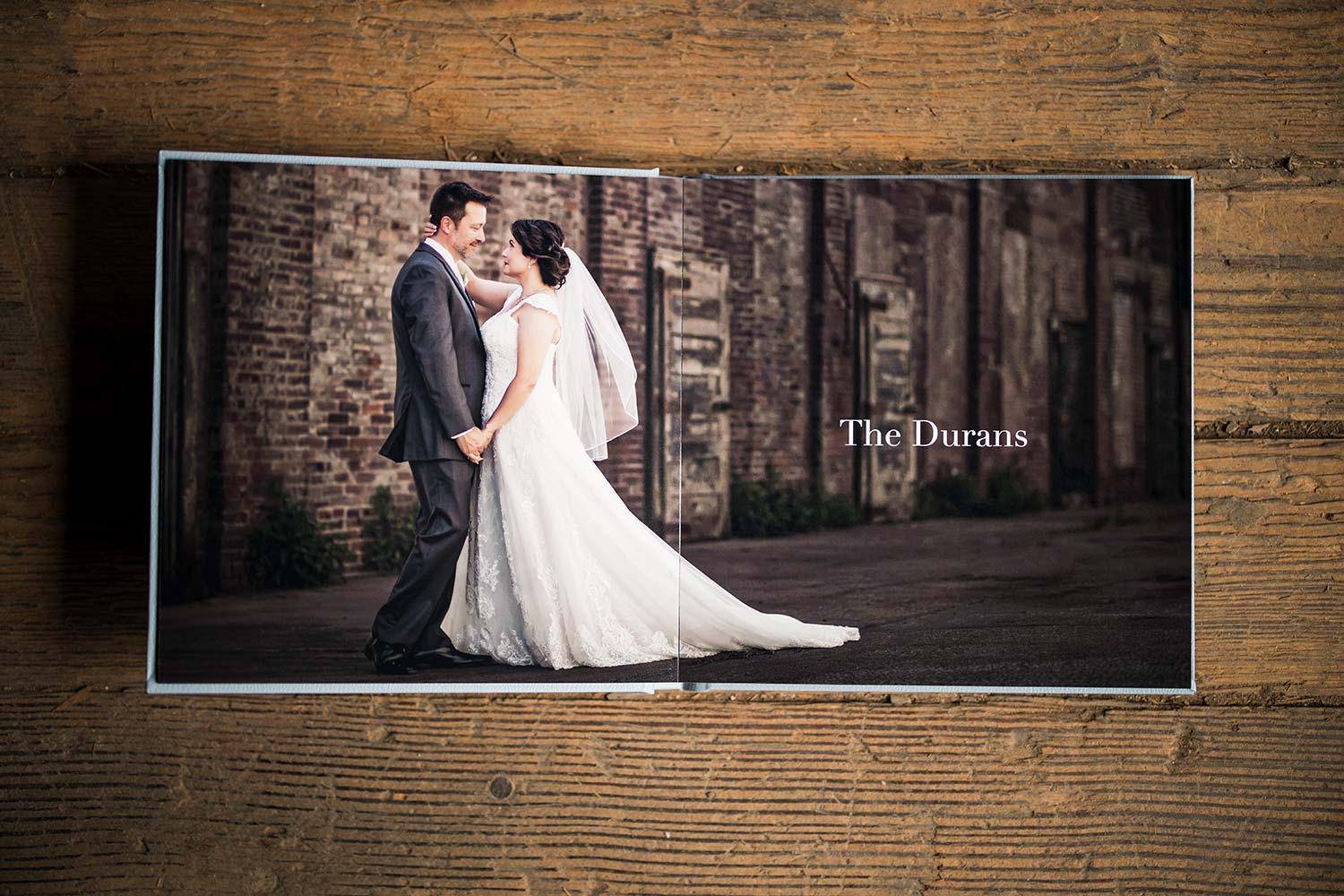
That Mac daddy is a 12×18 album, with crushed velvet liner, and up to 40 different leather options. So as you can see, we’re using size and material to drive them through to the top package.
What I’ve seen other photographers do is offer the same album at different sizes for each package. For example, there’s a lot of photographers I’ve run into where they go, “Okay, it’s going to be black leather acrylic. In my base package, it’s eight by eight. In my middle package, it’s 10 by 10. In my top package, it’s 12 by 12.” Yes, size matters, but you’re only going to be able to get somebody to spend so much money for an extra two inches. You have to think through that and understand that you have to go significantly different in size and material to give them enough of a reason to go to the next package up. That’s what’s going to help you make the biggest difference and impact with your clients.
So I hope that helps you guys. I hope that gets you motivated. Start positioning high end albums for your clients because I promise you, you are leaving money on the table.